
Partnerships with purpose: How private sector collaboration is shaping a more resilient future in Honduras
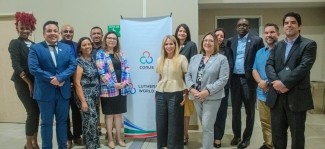
Representatives from Corus International unite to discuss private sector engagement in Honduras.
Tegucigalpa, Honduras — In Honduras, cross-sector collaboration is proving essential to building pathways out of poverty and toward more sustainable development. Over the course of two high-level dialogues held in Honduras this September, Corus International organization Lutheran World Relief joined partners from the private sector, civil society and government to explore how strategic alliances can strengthen community health, expand employment opportunities and drive shared economic progress.
The conversations — “From Challenge to Opportunity: Collaboration for the Future of Health in Honduras” on September 9 and “Innovative DNA: The Private Sector as a Driver of Change” on September 10 — were part of Lutheran World Relief’s regional engagement tour, designed to deepen partnerships and align efforts across multiple sectors to address systemic challenges.
Private Sector: A Catalyst for Health and Opportunity
The first event, co-hosted with the National Association of Pharmaceutical Manufacturers of Honduras (ANAPROHFAR), focused on the vital role that collaboration between nonprofit organizations and the pharmaceutical industry plays in improving access to healthcare and essential medicines for vulnerable communities. The discussion emphasized the need for integrated approaches that connect water, sanitation and hygiene (WASH), nutrition and health services as foundational elements of community well-being.
Speakers highlighted that sustainable impact requires more than physical access to services. It depends on affordability, continuous availability, effective quality-control mechanisms and standards that meet the needs of rural populations. During the event, ANAPROHFAR representatives shared examples of successful public-private initiatives in the health and pharmaceutical sectors that have improved service delivery and built community resilience.
This dialogue marked an important first step toward creating regular spaces where private-sector leaders, development organizations and government agencies can work together to address shared challenges and develop market solutions that expand access to healthcare and improve livelihoods.
Building a Workforce with Greater Access to Opportunity
The second event, hosted in collaboration with the Honduran Council of Private Enterprise (COHEP), explored how companies can play a transformative role in building a stronger, more opportunity-rich workforce. Participants focused on closing the skills gap between job seekers and labor market needs, with a particular emphasis on youth employment and workforce readiness.
One priority area discussed was the integration of mental health and psychosocial support into employment programs. These elements, combined with technical and soft skills training, are essential to helping job seekers enter and remain in the workforce. The event also highlighted initiatives like EmpleandoMentes, a digital platform launched last year that uses artificial intelligence to analyze applicants’ skills and match them with potential employers. This tool is currently in a pilot phase and is being strengthened to improve job placement outcomes and inform future collaboration with platforms like EmpleaConecta, which promotes employment opportunities nationwide.
“We are at a pivotal moment to scale our impact in the region,” said Galo Quizanga, Corus International’s Managing Director for Latin America and the Caribbean. “Based on successful experiences, we are adapting results-oriented employment models aligned with the dynamics of the Honduran and Central American markets. Our goal is to generate sustainable value through strong partnerships with key actors that boost both employability and entrepreneurship.”
Shared Goals, Collective Impact
Both events underscored the essential role of private enterprise in advancing social and economic progress in Honduras. By engaging companies, trade associations and employers as partners, not just stakeholders, Lutheran World Relief is co-creating solutions that strengthen health systems, prepare young people with market-relevant skills and expand pathways to employment, especially in underserved rural communities.
The dialogues also identified key areas for future collaboration, including the expansion of technical training opportunities, the mainstreaming of mental health support in workforce programs and efforts to bridge the gap between existing workforce skills and labor market demands.
As Honduras continues to navigate complex development challenges, cross-sector collaboration remains a powerful driver of progress. Together with its partners, Lutheran World Relief is committed to building a future where business innovation and social impact advance together, creating stronger communities and a more resilient economy for generations to come.
For more information, please contact Karen Pavon, Director of Central America .