Corus organization LWR and USDA launch $21.3 million Food for Progress project to grow Nigeria’s cocoa value chain
WASHINGTON, D.C. – The U.S. Department of Agriculture is funding Corus organization Lutheran World Relief [1] $21.3 million under its Food for Progress Program to launch a cocoa productivity and marketing project in Nigeria.
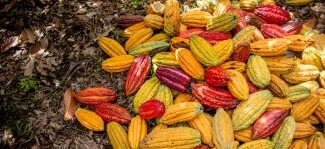
Known as the Traceability and Resilience in Agriculture and Cocoa Ecosystems of Nigeria (TRACE), the five-year project increases productivity in the cacao value chain by applying climate smart agriculture and expands the cacao market through traceability back to its source.
The award follows a White House announcement last week of more than $2.9 billion in new U.S. assistance to address growing global food insecurity. Of that amount, $178 million is being awarded under Food for Progress.[2]
“In partnership with the United States Department of Agriculture, Lutheran World Relief will apply decades of experience of work in cocoa value chains in Latin America and Asia and with the private sector to help Nigerian cocoa farmers improve productivity and traceability and expand in international markets,” said Ambassador Daniel V. Speckhard, Corus International’s president & CEO.
Lutheran World Relief leads Corus’ rural economic and agricultural livelihoods development programming. LWR guides Corus and local partners in analyzing market systems, strengthening agriculture value chains and the capacities of enterprises, and promoting livelihood diversification, rural financing, climate smart and improved agriculture practices, and sustainable water and land management.
Despite Nigeria consistently ranking among the world’s top five producers of cocoa, many Nigerian cocoa farmers operate at a subsistence level and struggle to make a living income. To strengthen Nigeria’s cocoa value chain and improve the livelihoods of its farmers, TRACE will provide trainings in improved agricultural production techniques, develop business solutions to improve farmer access to goods and services, strengthen business development capacity, promote traceability in buyer-seller relationships, advocate for improved policy and regulatory frameworks affecting sustainable cacao development and disseminate better market information through a multi-channel communications campaign.
In partnership with the federal and state governments of Nigeria, the International Institute of Tropical Agriculture, the Cocoa Research Institute of Nigeria, Ecometrica, and C-Lever.org, Lutheran World Relief will be implementing TRACE in Nigeria's cocoa-producing states of Abia, Akwa Ibom, Cross Rivers State, Ekiti, Ondo, and Osun.
“TRACE comes at an opportune time when the government’s and private sector’s resurgent interest in Nigerian cocoa is intersecting with growing consumer awareness of human rights abuses, including child labor, fair income for smallholder farmers, and environmental pressure and climate change in tropical agriculture,” says Paul Macek, Corus’ Associate Vice President for Rural Economies and Agricultural Livelihoods. “We are ready to capitalize on this moment to amplify TRACE’s impact and accelerate the country’s progress in sustainable production.”
####
CONTACT: Hamid Mansaray, Senior Regional Director, West Africa and Haiti, Corus International
[1] Founded in 1945, Lutheran World Relief leads Corus’ rural economic and agricultural livelihoods development programming. LWR guides Corus and local partners in analyzing market systems, strengthening agriculture value chains and the capacities of enterprises, and promoting livelihood diversification, rural financing, climate smart and improved agriculture practices, and sustainable water and land management.
[2] The USDA Food for Progress Program helps developing countries and emerging democracies modernize and strengthen their agricultural sectors. Food for Progress has two principal objectives: to improve agricultural productivity and to expand trade of agricultural products. For more information, visit https://www.fas.usda.gov/programs/food-progress.