25 Years of Partnership and Impact: IMA World Health in the Democratic Republic of the Congo
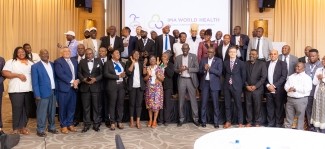
Staff, leaders and partners gather in the Democratic Republic of Congo to commemorate 25 years of IMA World Health’s work strengthening the national health system.
For 25 years, Corus organization IMA World Health has worked to strengthen the health system of the Democratic Republic of Congo (DRC), supporting national and local leaders through periods of conflict, recovery and reform. When facilities were damaged, supply chains disrupted and services strained, IMA World Health invested not only in restoring access to care, but in reinforcing the systems required to sustain it. Over time, that steady focus has expanded essential health services and strengthened the foundations of care nationwide.
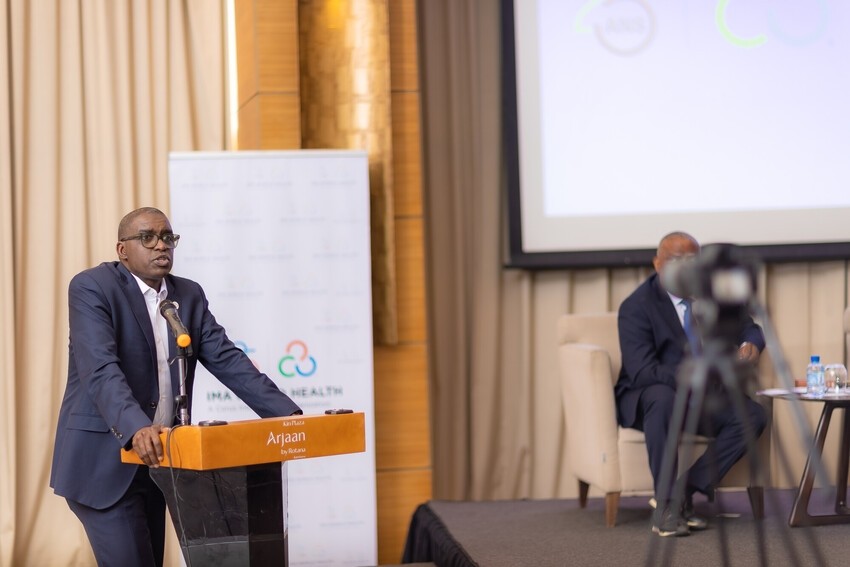
This milestone was recently commemorated through the DRC Health Summit, a high-level forum convened in partnership with the Ministry of Health and national and international stakeholders. The summit brought together government officials, development partners, civil society and health leaders to reflect on 25 years of health system strengthening and to identify priorities for the years ahead. It also provided an opportunity to highlight IMA World Health’s contributions across health, nutrition, WASH, and humanitarian response, while aligning partners around shared goals toward 2030 national health objectives.
What began in 2000 as an ambitious effort to support essential health services across 56 health zones has grown into one of the longest-running and most comprehensive health initiatives in the country. Today, as part of Corus International, IMA World Health’s work in the DRC reflects what sustained investment, technical leadership and collaboration with Congolese institutions can achieve over time.
From Crisis to National Scale
IMA World Health launched its first large-scale initiative in the DRC at a pivotal moment. The health sector was emerging from years of instability, with weakened infrastructure and limited coordination across provinces.
Rather than concentrating on a single disease or a small number of facilities, IMA World Health partnered with Congolese institutions to reinforce the broader health system.
That first USG-supported program in 2000 reached every province and served a population of roughly 8 million people. It introduced a full package of essential health services across 56 health zones, an approach that was novel at the time and laid out the groundwork for national-scale reform.
Over time, that vision expanded through major initiatives such as Access and later the UK Aid–funded ASSP program, a six-year, $285 million investment that enabled IMA World Health and its partners to address infrastructure, supply chains, workforce training, community engagement and data systems at scale.
Since 2013 alone:
- 44.7 million visits have been made to IMA World Health–supported health facilities
- 286 health centers have been built or renovated
- More than 5 million births have been assisted by skilled personnel in supported facilities
These figures reflect measurable improvements in access and quality. They also represent mothers who survived childbirth, children treated for preventable illness, and families who can now rely on care closer to home.
Transforming Maternal and Child Health
Maternal, child and newborn health have anchored IMA World Health’s work from the beginning.
Through health system strengthening initiatives funded by UK Aid, USG and other partners, IMA World Health has helped improve outcomes for mothers and children. In supported zones:
- Maternal deaths declined by 38 percent
- Neonatal deaths declined by 52 percent
- Facility-based deliveries increased from just over 60 percent to over 95 percent
Innovation has reinforced these gains. IMA World Health introduced mobile e-learning tools such as the Safe Delivery App, which provides offline, video-based guidance for managing obstetric and neonatal emergencies. In facilities without specialized neonatal units, health workers have used the app to successfully care for low birth-weight babies, translating training into lifesaving action.
Child health and nutrition outcomes have also improved. In targeted regions, malnutrition fell by 57 percent in two years. Since 2013, more than 6.4 million children have been screened and referred for care, and 2.8 million children have been protected against preventable diseases through strengthened vaccine cold-chain systems.
A National Leader in Malaria Prevention
IMA World Health’s work has helped reshape malaria prevention across the DRC.
Since 2013, more than 28.6 million insecticide-treated mosquito nets have been distributed and monitored through national campaigns supported by UK Aid and the Global Fund.
IMA World Health pioneered house-to-house net distribution combined with real-time tracking systems using Open Data Kit technology. By demonstrating higher utilization rates and improved cost effectiveness, the approach was adopted as national policy.
At one point, IMA World Health was the largest purchaser of long-lasting mosquito nets in the world, accelerating the shift toward more durable protection nationwide.
Expanding Access to Care for Survivors of Violence
In regions deeply affected by conflict, IMA World Health has strengthened services for survivors of violence.
Through USG-funded programs such as Ushindi and Tushinde Ujeuri, nearly 800,000 community members have received prevention messaging. Survivors have gained access to emergency medical care, psychosocial support, legal services, and economic empowerment opportunities.
A critical component of this work has been the preparation and distribution of post-exposure prophylaxis, or PEP kits. These kits contain antiretroviral medication and other essential medical supplies that must be administered within a short window after assault to reduce the risk of HIV infection and address immediate health needs. Since the launch of these initiatives, 109,800 PEP kits have been prepared and distributed, expanding access to timely, evidence-based care in areas where services were previously limited.
More than 10,000 survivors have also received psychosocial support, reinforcing the importance of comprehensive recovery services.
Elevating Community Voice and Data for Decision-Making
IMA World Health’s impact extends beyond direct service delivery.
Through more than 4,200 Community Scorecards, communities have evaluated the quality of care in their local facilities and identified gaps requiring attention. The government later asked IMA World Health to help standardize and formalize this approach nationwide.
IMA World Health also played a pivotal role in modernizing the country’s health information system. By supporting the adoption of DHIS2, the organization helped transition the DRC from paper-based reporting to real-time digital data systems that now inform national planning and resource allocation.
Work on integrated human resources and payroll systems identified inefficiencies and redirected resources to active frontline health workers, strengthening transparency and financial accountability.
A Long-Term Commitment to Congo
What distinguishes IMA World Health’s work in the DRC is continuity.
Across shifting political contexts, evolving donor priorities and ongoing instability, IMA World Health has maintained a consistent focus on reinforcing national systems. Its work has supported reforms in service delivery, expanded preventive care, modernized data systems, and strengthened accountability mechanisms that continue to shape health programming across the country.
The recent DRC Health Summit provided an opportunity to reflect not only on the longevity of IMA World Health’s presence, but on the institutional reforms and partnerships that now underpin health delivery nationwide. Senior leadership engagement and strategic discussions with the Ministry of Health and development partners reinforced IMA World Health’s role as a trusted technical and operational partner in fragile and conflict-affected settings.
At the same time, IMA World Health continues to respond to emerging public health threats, including mpox, cholera and WASH-related emergencies, while advancing investments in preparedness, surveillance and system resilience. This dual focus, addressing urgent needs while strengthening long-term capacity, reflects IMA World Health’s continued commitment to advancing health security and long-term stability in the DRC.
FAQs
The DRC Health Summit was convened to commemorate 25 years of IMA World Health’s work strengthening the national health system in the Democratic Republic of the Congo. Held in partnership with the Ministry of Health, the summit brought together senior government officials, development partners, UN agencies, civil society organizations and IMA World Health leadership.
The program included opening remarks from senior health authorities, a video presentation highlighting 25 years of partnership, and panel discussions on health system strengthening and financing transitions in fragile and conflict-affected contexts. The event concluded with the awarding of medals and certificates of honor to individuals who have marked IMA World Health’s history in the DRC.
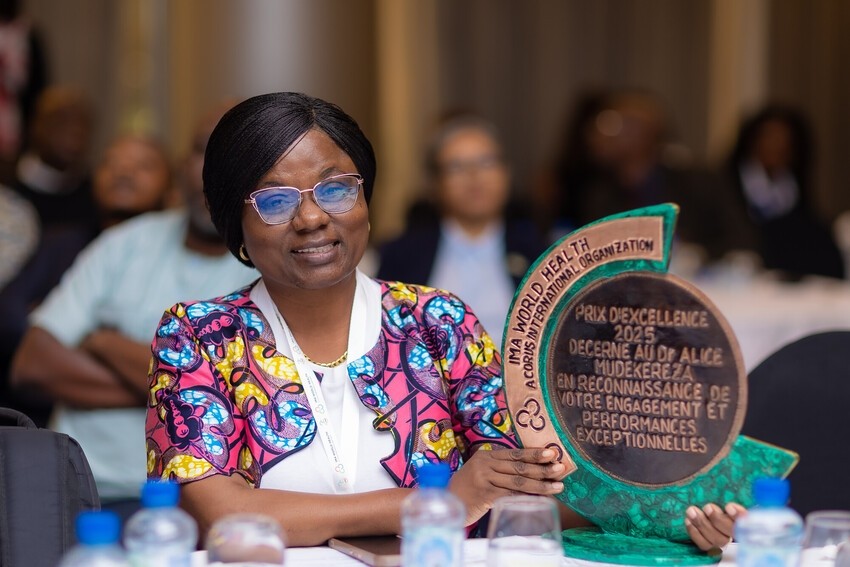
During the summit, recognition was given to Dr. Alice Mudekereza, Dr. Bill Clemmer, Dr. Bernard Ngoy, Dody Ndofula, and Dr. Larry Sthreshley for their leadership and contributions to health system strengthening in the country.
Over the past quarter century, IMA World Health has partnered with national and provincial health authorities to expand access to essential services, improve maternal and child health outcomes, modernize data systems, strengthen malaria prevention and support survivors of violence.
This long-term approach has focused not only on service delivery, but on reinforcing national systems, from supply chains and workforce development to digital reporting platforms such as DHIS2, enabling sustainable improvements in health outcomes nationwide.
IMA World Health continues to respond to emerging public health threats, including mpox, cholera and WASH-related emergencies, while advancing investments in surveillance, preparedness and system resilience.
At the same time, IMA World Health remains committed to strengthening maternal and child health services, malaria prevention campaigns and support for survivors of violence, working in close partnership with the Ministry of Health and development partners to advance long-term health security and stability in the DRC.